Cycle tracking, Unsafe and SWARMP follow-up, repair coordination, and closeout support for buildings over six stories.
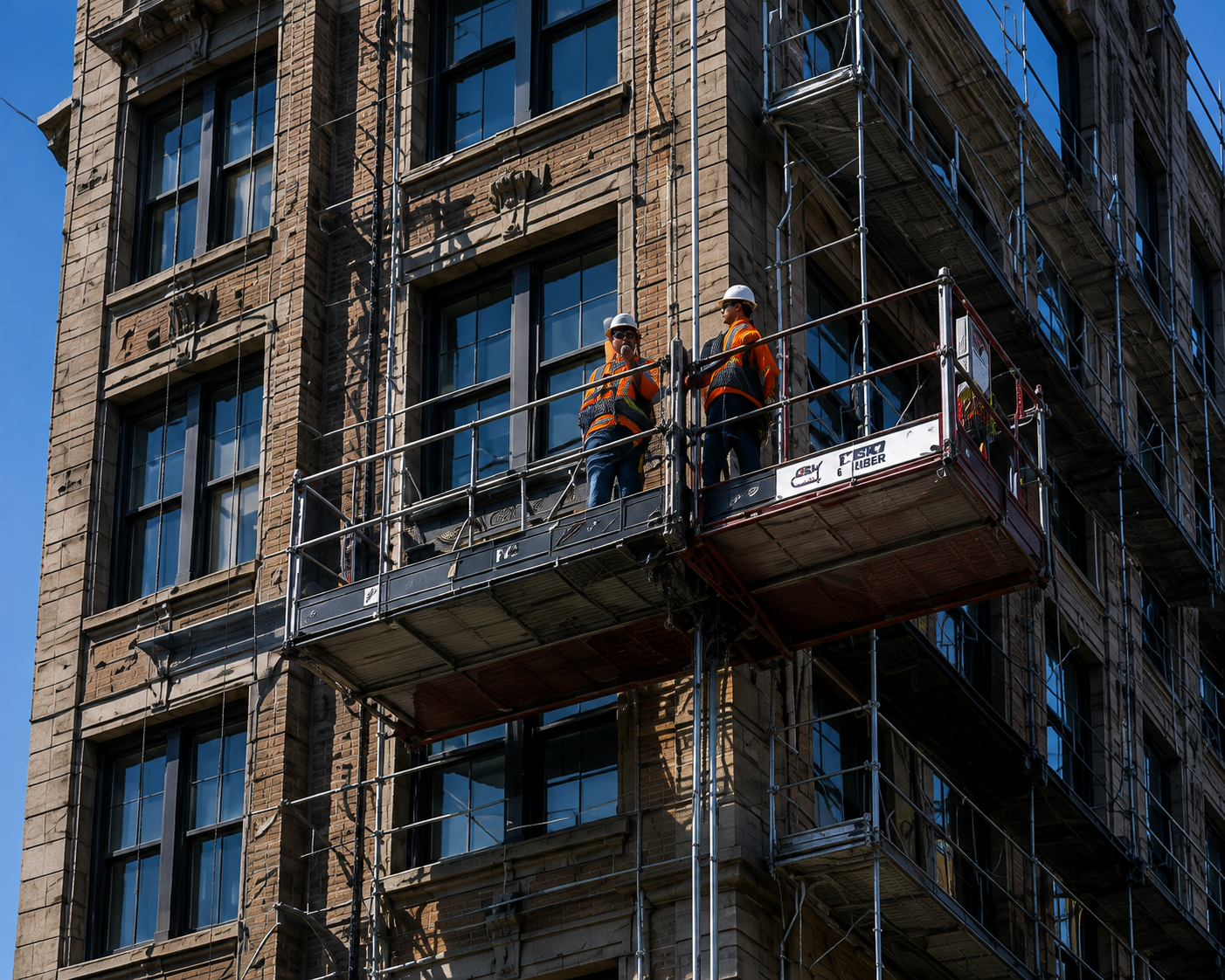
Buildings greater than six stories are subject to periodic facade inspection and filing requirements under New York City's Facade Inspection Safety Program.
Reports must be filed by a Qualified Exterior Wall Inspector within the assigned cycle and subcycle, and conditions classified as Unsafe or SWARMP carry follow-up obligations that continue after the initial filing.
Exterior.nyc helps owners track the cycle, organize documentation, and coordinate the work required to reach a clean closeout.
FISP support organizes the inspection, repair, and filing obligations that run across a facade cycle.
The support may consider:
Our service may include:
FISP obligations do not end when a report is filed. Unsafe conditions carry repair and re-filing requirements, SWARMP items carry stated correction timeframes, and penalties can accrue while an item remains open.
Buildings frequently arrive at a new cycle with unresolved conditions from the previous one, which compounds cost and complicates closeout.
Early organization of the cycle helps owners understand what remains open and what must be completed before the next deadline.
Exterior.nyc reviews FISP status alongside the building's violation record, prior repair history, access constraints, and current facade condition.
This broader view helps identify whether an open filing item also involves an unsafe condition, a permit obligation, or a repair scope that has not yet been defined.
All inspections, report classifications, and filings under FISP must be performed and submitted by a Qualified Exterior Wall Inspector, and any determination involving code compliance must be made by qualified licensed professionals.
FAQ
Straight answers on FISP, parapets, sidewalk sheds and unsafe facade conditions in NYC.


Copyright 2026 - All Rights Reserved by Exterior.nyc Powered by ARCKO Built by Growna