Emergency response for loose masonry, falling debris, public protection, stabilization, and clearing the condition of record.
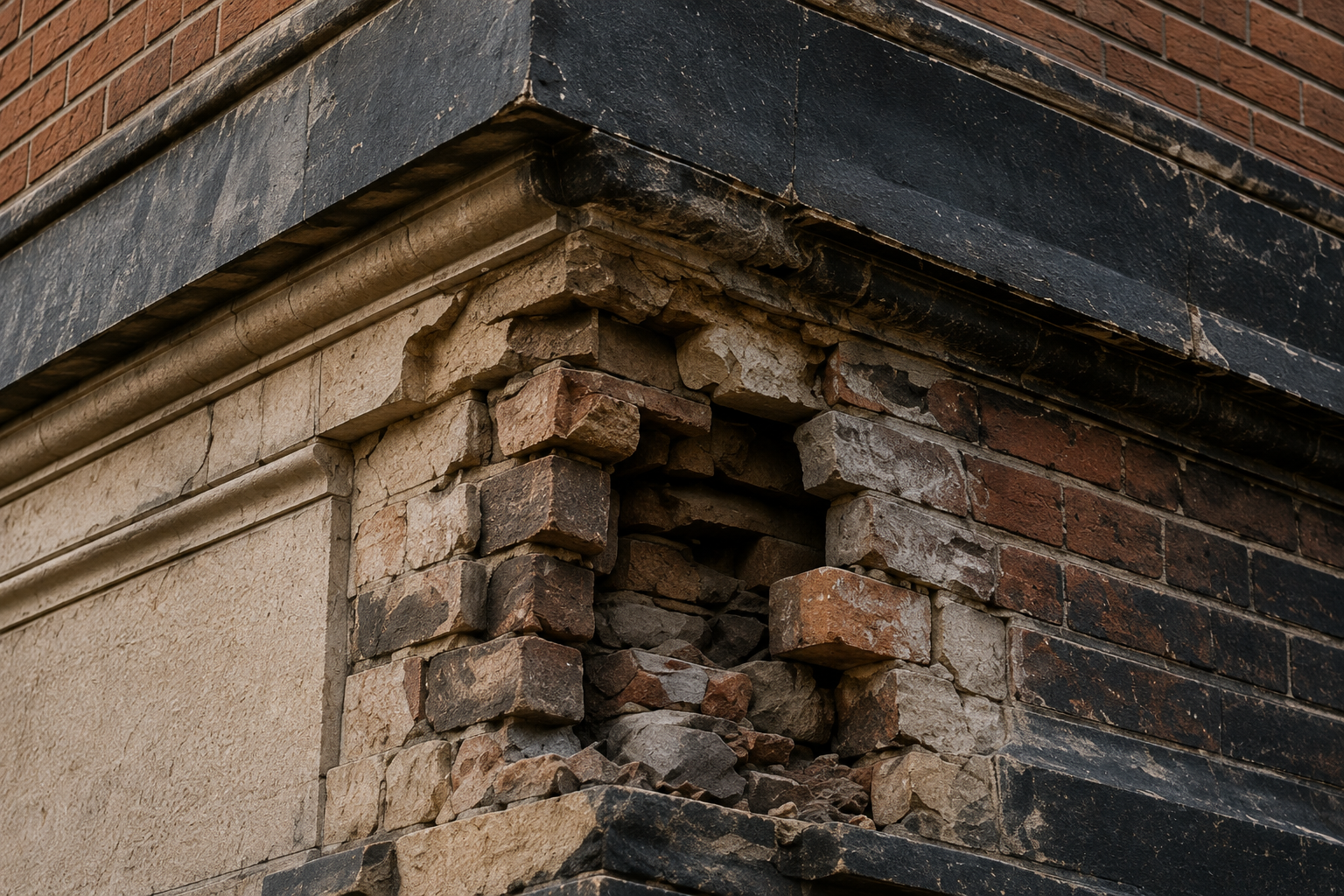
An unsafe facade condition requires immediate action. Loose masonry, displaced coping, spalling material, or a failing lintel can produce falling debris onto a sidewalk or adjacent property at any time.
Once a condition is identified as unsafe, obligations for public protection, stabilization, and notification follow quickly, and enforcement activity often follows with them.
Exterior.nyc helps owners organize the response and the documentation it generates.
Unsafe condition support organizes the immediate protective and corrective steps an exterior hazard requires.
The response may consider:
Our service may include:
Unsafe conditions carry immediate exposure. The risk to the public is the primary concern, and liability, enforcement, and penalty exposure follow directly from it.
Delay in installing protection or beginning stabilization can escalate an enforcement matter substantially and can affect insurance position if an incident occurs.
Organized response helps owners address the hazard first and the record second, without losing either.
Exterior.nyc reviews the unsafe condition alongside the building's facade history, FISP classifications, violation record, and access constraints.
This broader view helps identify whether the condition is isolated or part of a wider pattern that will require a larger repair scope.
Any determination involving structural adequacy, the sufficiency of stabilization measures, or code compliance must be made by qualified licensed professionals.
FAQ
Straight answers on FISP, parapets, sidewalk sheds and unsafe facade conditions in NYC.


Copyright 2026 - All Rights Reserved by Exterior.nyc Powered by ARCKO Built by Growna